

Wenzheng Su, PhD Candidate in Hydraulic Engineering, Institute of Ocean Engineering, Shenzhen International Graduate School, Tsinghua University
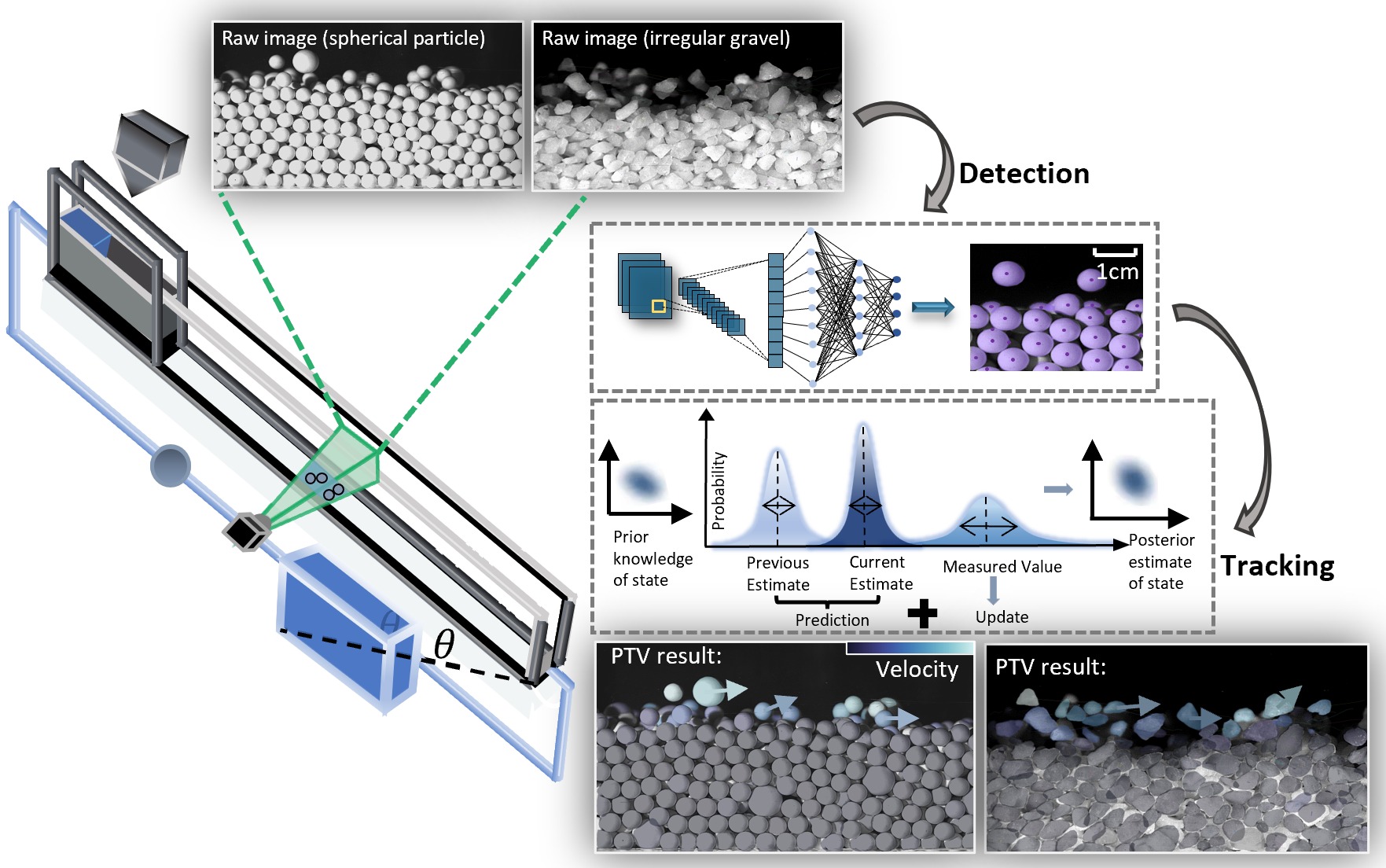
Wenzheng Su is a PhD candidate in Hydraulic Engineering at the Shenzhen International Graduate School, Tsinghua University. His research focuses on experimental bedload sediment dynamics and the particle-scale mechanisms underlying sediment transport. He combines high-speed imaging, particle tracking, and computer vision to resolve the motion and interactions of individual grains under complex flow conditions. His work particularly investigates the effects of particle shape and flow forcing on grain trajectories, rotation, granular fluctuations, and transport behavior. He aims to develop particle-resolved experimental approaches that connect grain-scale physics with predictive models of sediment transport.
![Intelligent Compaction {"category":"webinar","subjects":["Ground Improvement", "Soil Mechanics"],"number":"GI102","instructors":["Antonio Correia","George Chang"]}](/asset-v1:ISSMGE+GI102+2011+type@asset+block@pic5.jpg)
![Role of the Soil-Water Characteristic Curve in Unsaturated Soil Mechanics (Geoffrey Blight Lecture - 19th ICSMGE) {"category":"honour_lecture","subjects":["Soil Mechanics"],"number":"ICSMGE19106","instructors":["Delwyn G. Fredlund"]}](/asset-v1:ISSMGE+ICSMGE19106+2017+type@asset+block@geoffrey-blight-lecture.jpg)
![On the Fabric and State Parameters of Active Clays for Contaminant Control (R. K. Rowe Lecture - 19th ICSMGE) {"category":"honour_lecture","subjects":["Contaminant Transport", "Soil Mechanics"],"number":"ICSMGE19114","instructors":["Mario Manassero"]}](/asset-v1:ISSMGE+ICSMGE19114+2017+type@asset+block@rowe-lecture.jpg)
![Soil Behaviour {"category":"course","subjects":["Soil Mechanics"],"number":"SB-101","instructors":["Fumio Tatsuoka", "Eduardo Alonso", "Pierre Delage"]}](/asset-v1:ISSMGE+SB-101+2021+type@asset+block@cover.jpg)
![Introduction to Slope Engineering {"category":"course","subjects":["Numerical and Constitutive Modelling","Soil Mechanics","Slope Stability"],"number":"GEE2020-1","instructors":["Wu Shunchuan"]}](/asset-v1:ISSMGE+SE101+2023+type@asset+block@intro-slide.jpg)
![Unsaturated Soils: Basic Concepts and Applications (Part 1 and Part 2) {"category":"webinar","subjects":["Soil Mechanics"],"number":"SM101","instructors":["Eduardo Alonso"]}](/asset-v1:ISSMGE+SM101+2012+type@asset+block@pic3.jpg)
![Soil Characterisation {"category":"course","subjects":["Soil Mechanics","In-situ Testing","Residual Soils","Settlements","Laboratory Testing"],"number":"VU-SC","instructors":["Cor Zwanenburg","Samuel Kofi Ampadu","Gabriel Auvinet","Serge Leroueil","Richard Jardine"]}](/asset-v1:ISSMGE+TC102-002+2017+type@asset+block@Leroueil-small.jpg)
![Undergraduate teaching of Unsaturated Soil Mechanics: Building on fundamental physical mechanisms to pave the way for geotechnical analyses {"category":"talk","subjects":["Teaching Geotechnics", "Soil Mechanics"],"number":"TC306-GEE2025-05","instructors":["Alessandro Tarantino", "Alessia Amabile"]}](/asset-v1:ISSMGE+TC306-GEE2025-05+2025+type@asset+block@tarantino-amabile.png)
![Unsaturated Soil Mechanics {"category":"course","subjects":["Soil Mechanics","Groundwater Flow & Seepage","Shear Strength of Ground Materials","Settlements"],"number":"VU-USM","instructors":["Delwyn G. Fredlund"]}](/asset-v1:Delwyn-G-Fredlund+Unsaturated-Soil-Mechanics+2019+type@asset+block@Introduction-to-Unsaturated-Soil-Mechanics.jpg)